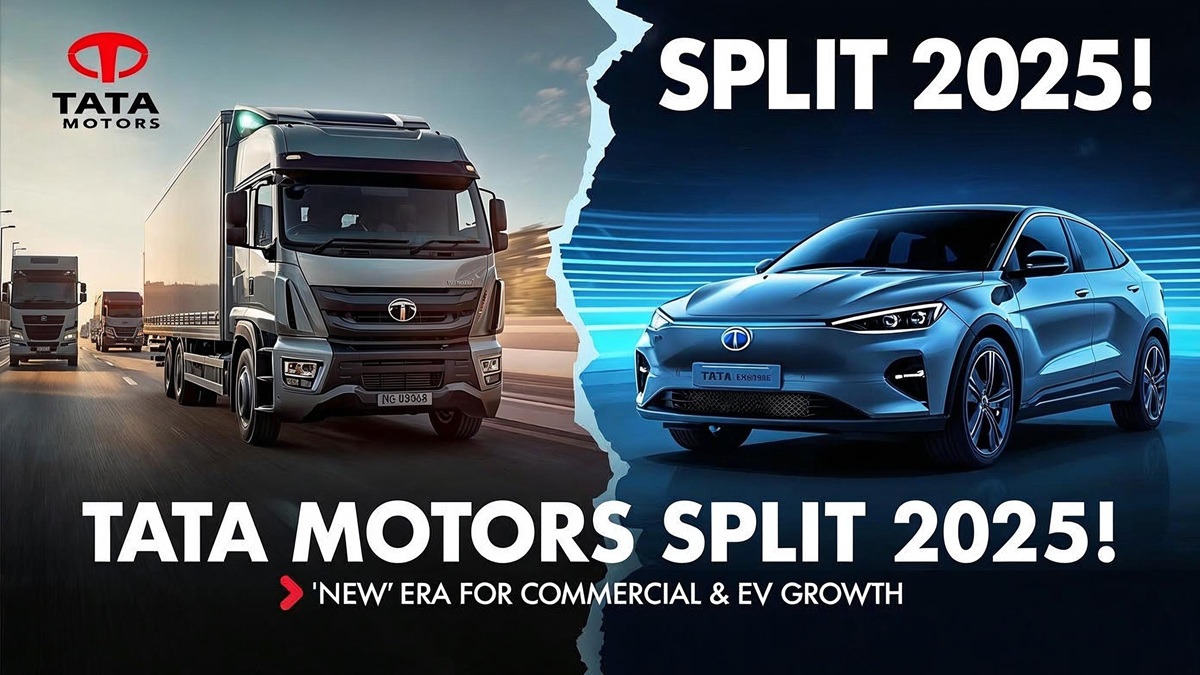
Tata Motors demerger of commercial vehicles news is shaking up the auto market in 2025.
India’s biggest automaker has officially separated its Passenger Vehicle (PV) and Commercial Vehicle (CV) businesses into two independent entities. The goal? Sharper focus, faster innovation, and bigger investor value. With this move, Tata Motors joins global peers like Toyota and Volkswagen that restructured to boost efficiency. Experts believe this bold step could redefine India’s auto sector, especially amid the EV boom and changing mobility needs. Let’s break down what this split means for you, investors, and the Indian economy.
tmcv | tmcv share price | tmlcv share price | tmcv listing | tata motors commercial vehicles share price | tata motors cv listing | tata motors commercial vehicle listing date | tata motors cv share price | tmcv share | tata motors | tmlcv listing date | tmcv listing time | tmlcv share price today live | tata commercial vehicle listing date | cnbc awaaz live
Why Tata Motors Went for This Demerger of Commercial Vehicles
The Tata Motors demerger commercial vehicles plan has been in discussion since 2023, when the company hinted at simplifying its structure.
By 2025, it received final NCLT approval to officially spin off its CV unit from the passenger vehicle and EV division.

Key Reasons Behind the Move:
- 🧭 Sharper Focus: Different business cycles for CV and PV segments demanded dedicated management.
- ⚙️ Operational Efficiency: Each vertical can now pursue targeted R&D, marketing, and partnerships.
- 💰 Investor Value: Analysts expect a 10-15 % valuation boost post-demerger.
- 🌱 EV Acceleration: Freed resources will help Tata focus on EV and hydrogen tech development.
Chairman N. Chandrasekaran said during the announcement:
“This demerger is not a separation — it’s a strategic alignment. It allows Tata Motors to unlock new growth engines for both businesses.”
Tata Motors Demerger Commercial Vehicles: What Changes for Investors & Markets
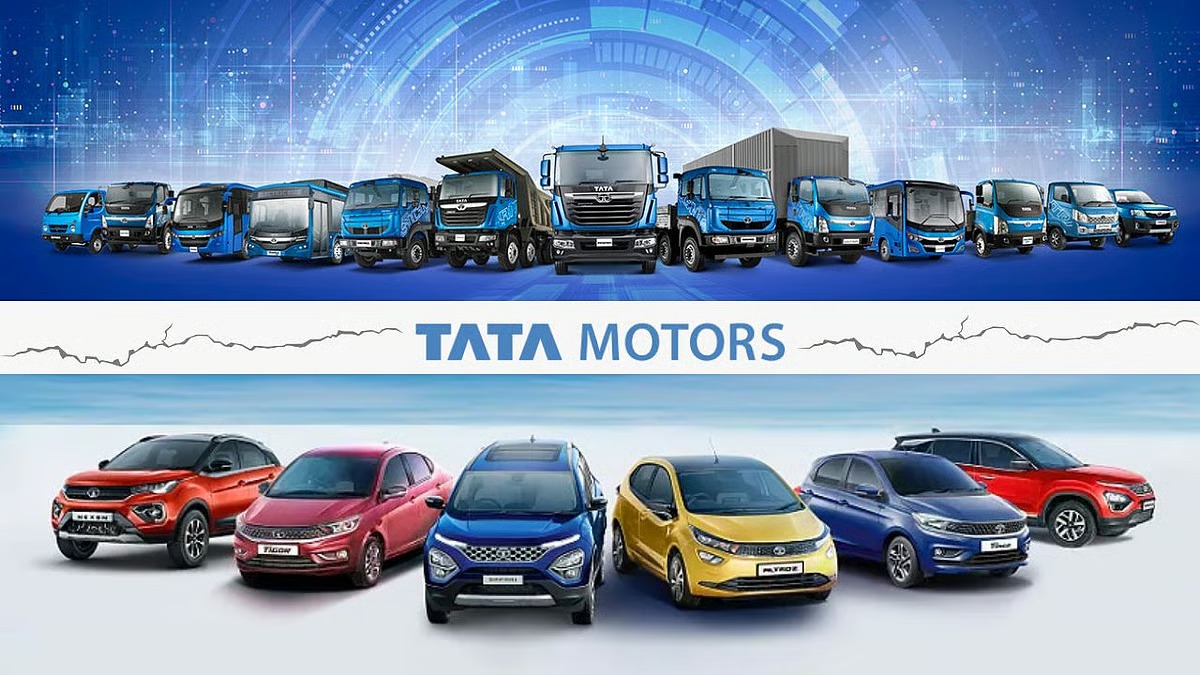
The demerger created two listed arms:
- Tata Motors Passenger Vehicles Ltd (PV/EV)
- Tata Motors Commercial Vehicles Ltd (CV)
💹 Share Allocation: Existing shareholders receive equal proportion shares in both entities.
📆 Effective Date: October 2025 (after regulatory clearance).
💼 Valuation Impact: Brokerages like Motilal Oswal and HDFC Securities predict a ₹20-30 rise per share within a month of listing.
Market Reaction:
The stock surged 6.2 % on the BSE after the official announcement.
Investors view the Tata Motors demerger of commercial vehicles in 2025 as a clean move towards better governance and focused execution.
Check Out: Top 5 Budget Friendly Electric Cars in India- 80% लोग खरीदने से पहले ये गलती करते हैं!
Impact on Commercial Vehicle Business
Tata’s CV arm contributes ~45 % of its total revenue, covering trucks, buses, and infrastructure vehicles.
Post-demerger, the company plans to:
- Expand its LNG and CNG truck portfolio 🚚
- Localize supply chains to cut costs by 10 % within two years
- Launch hydrogen-based heavy vehicles by 2026
- Partner with global logistics giants for tech collaboration
Girish Wagh, Executive Director (Tata Motors CV), commented:
“With the Tata Motors demerger commercial vehicles structure, our business can now innovate faster, respond quicker to market demands, and lead the green-mobility transition.”
Passenger Vehicles & EV Division: The Other Half of the Story
While the commercial division gains independence, the passenger vehicle unit will accelerate its EV game.
Tata Passenger Vehicles Ltd holds the Nexon EV, Punch EV, and Curvv brands — expected to launch five new electric models by 2026.
Key Takeaways:
- ⚡ Tata EV sales up 43 % YoY in Oct 2025.
- 🏭 New battery plant in Gujarat for local production.
- 🤝 Partnership talks with Jaguar Land Rover for shared tech.
Analysts believe the split gives both arms freedom to pursue distinct strategies — commercial for infrastructure and fleet growth, and passenger for sustainability and premium mobility.
📈 Market Experts on Tata Motors Demerger Commercial Vehicles 2025
Auto Analyst Rajiv Mehta says:
“Tata’s timing is perfect. The CV market is recovering after pandemic slowdown, and a separate entity lets investors value it properly.”
ICRA Report Highlights:
- Indian CV demand expected to grow 8 % in FY26.
- Tata’s market share is likely to rise to 49 %.
- Better cash flow management post demerger.
📊 Stock Sentiment: Moderately Bullish. Analysts see ₹950-₹1,000 targets in the near term.
Financial Outlook After the Demerger
The Tata Motors demerger of commercial vehicles move simplifies financial reporting and capital allocation.
Projected Financial Benefits:
- 📉 Debt reduction by ₹3,500 crore through asset restructuring.
- 📈 EBITDA margin expansion from 11 % to 13.5 % in FY26.
- 🧩 Improved transparency, attracting foreign investors.
In the long run, both arms could be listed independently on global indices like MSCI India and FTSE Emerging Markets.
Broader Impact on India’s Auto Industry
The Tata Motors demerger of commercial vehicles in 2025 sets a benchmark for Indian corporate restructuring.
It encourages competitors like Mahindra and Ashok Leyland to evaluate similar splits for specialization.
Industry Reactions:
- “It’s a template for future auto reforms,” said SIAM President Vinod Aggarwal.
- “India is moving from volume to value-driven automotive growth,” added CRISIL Research.
How the Demerger Aligns with Tata’s Vision 2028
Tata Group’s “Vision 2028” emphasizes sustainability, digital mobility, and global leadership.
The Tata Motors demerger of commercial vehicles move is part of that long-term blueprint.
🌿 EV Ecosystem: Building charging networks in 100+ Indian cities.
🤖 Smart Manufacturing: Integrating AI for predictive maintenance in plants.
💼 Global Expansion: Targeting African and Southeast Asian markets.
Breaking News Update (Nov 2025)
📢 Tata Motors announced that its board approved the final share exchange ratio and appointed independent directors for each entity.
The new logos and brand identities for “Tata Motors Commercial Vehicles Ltd” and “Tata Motors Passenger Vehicles Ltd” will be revealed in December 2025.
Final Thoughts on Tata Motors Demerger Commercial Vehicles 2025
This split marks a historic moment in Indian automotive history.
By creating focused entities, Tata Motors can drive innovation faster while strengthening its lead in both EV and CV segments.
For investors and consumers alike, the Tata Motors demerger commercial vehicles 2025 is not just a corporate event — it’s a signal of India’s automotive future getting smarter, cleaner, and more profitable. ✨
Read More: Top 5 Shocking Points by Ford CEO Jim Farley on Apple CarPlay Ultra!
Frequently Asked Questions
What is the Tata Motors demerger commercial vehicles plan?
It’s the separation of Tata Motors’ passenger and commercial vehicle businesses into two independent entities for better focus and growth.
Why did Tata Motors decide to split now?
To unlock shareholder value and improve operational efficiency as EV demand grows.
Will shareholders get new shares?
Yes, they’ll receive equivalent shares in both companies.
Is Tata Motors’ demerger of commercial vehicles good for investors?
Analysts see it as positive — clearer valuation and growth path for each business.
What happens to the Tata EV business?
It stays with the passenger vehicle entity, expanding EV innovation.
When will the demerger be effective?
Implementation started in October 2025 after NCLT approval.
How does this affect commercial vehicle buyers?
Expect more innovative, fuel-efficient truck and bus models ahead.
Will the split impact Tata Motors’ stock price?
Yes — experts project short-term volatility but long-term gain.
Your Opinion Matters!
Do you think the Tata Motors demerger of commercial vehicles move was a smart decision?
📊 Vote below or share your thoughts in the comments!

Bablu Ayodhi is an experienced automobile writer and the founder of GadiJankari.com. He shares clear and trustworthy news about cars, bikes, and new auto technologies. All his articles follow strict editorial and fact-checking standards to give readers reliable information.
Expertise: Car & bike reviews and launches, mileage and comparisons, EVs and auto technology updates.